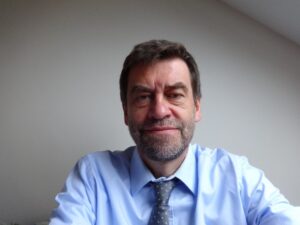
Alex Yakovlev
Tsetlin Machines: stepping towards energy-efficient, explainable and dependable AI
Abstract:
Artificial Intelligence (AI) and Machine Learning (ML) enter our lives in many forms, from high-end data processing and mining for applications such as medical diagnosis and cyber-commerce to low-end intelligent interfaces (mobile and internet of things (IoT) devices) for voice and image recognition applications such as industrial and household sensing and healthcare monitoring. Lately, ML has been gradually albeit cautiously (!) entering safety-critical applications. The key challenges on this path are the issues of, firstly, high cost of conventional ML methods, such as deep learning (e.g. DNNs), in terms of energy and computational resources, and secondly, the lack of interpretability of the models. Tsetlin Machine (TM) is a recent logic and automaton-based model for reinforcement learning. It has demonstrated competitive accuracy on many popular benchmarks while providing a natural interpretability as well as energy-efficiency, enabling this model for both inference and training at the edge. The talk will provide an overview of TM architecture and its parameter tuning. The gains in energy-efficiency and interpretability, and hence trustworthiness, against DNNs will be illustrated through a number of case studies.
Speaker’s Bio:
Alex Yakovlev, PhD (1982), DSc (2006). Since 1991 he is with Newcastle University, UK, where he is a Professor of Computer Systems Design, founded and leads the Microsystems Research Group, and co-founded the Asynchronous Systems Laboratory. He was awarded an EPSRC Dream Fellowship in 2011–2013. He has published 8 edited and co-authored monographs and more than 500 papers in IEEE/ACM journals and conferences, in the areas of concurrent and asynchronous circuits and systems, Petri nets, electronic design automation, low power circuits and systems, AI and machine learning hardware based on Tsetlin automata and electromagnetic computing, with several best paper awards and nominations. He co-invented Signal Transition Graphs (STGs) and co-led developments of tools for them (Petrify, Workcraft) throughout the last 30 years. He has supervised over 70 PhD students. He is a Fellow of Royal Academy of Engineering in the United Kingdom and Fellow of IEEE. He is a co-founder of a recently created spin-out company Mignon Technologies Ltd, commercialising solutions for ML at the edge.